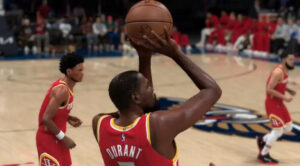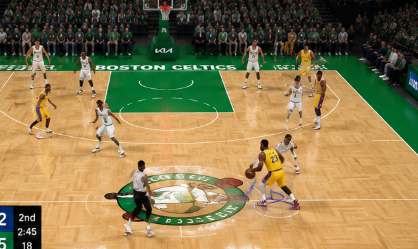
Finishing in NBA 2K27 is changing in a big way. The days of simply getting to the rim, triggering a dunk animation, and expecting an easy finish are gone. With the Dynamic Dunk Meter and Dynamic Layup Engine, players have to pay much more attention to timing, defensive positioning, and what is happening around them.
At first, the new system can feel a little awkward. Once the timing becomes familiar, though, finishing can feel much more rewarding.
How the Dynamic Dunk Meter Works
The biggest change is that the dunk meter now reacts to the play as it develops.
From the moment a player takes off, the game continues to evaluate the defensive position. If I beat my defender cleanly and have plenty of space, the green window can become noticeably larger. That gives me more room to time the finish.
The situation changes when another defender rotates toward the basket. If a help defender arrives around the peak of the jump, the green window can shrink quickly. This means I cannot simply start a dunk and ignore what happens afterward.
Late contests are still important, but they do not work exactly like before. The timing window can change during the animation, so watching the meter and reacting to the situation is much more important.
For the safest results, the general approach is to wait until the meter is fully filled before releasing. Learning that rhythm is one of the first things I would recommend when getting used to the new system.
Understanding the Dynamic Layup Engine
Layups are also getting a major change through the Dynamic Layup Engine.
Instead of relying on the same fixed animation every time, the system can adjust the finishing animation based on the player’s position, the defender, and the situation around the basket.
That makes high-finishing players particularly interesting. A player with strong finishing attributes can make more adjustments in the air, giving them better opportunities to avoid a shot blocker or finish around a defender.
Moves such as Hop Steps, Euro Steps, and Spins also play a bigger role. These actions are more independent, while the engine can combine the right finishing animation with the position and matchup.
Against a weak defender, I can sometimes get through the contact and finish cleanly. Against a strong rim protector, however, I still need to respect the defense. Good attributes do not mean every layup is going in.
How I Would Practice the New System
The best way to learn these mechanics is to spend some time in the practice mode instead of immediately testing everything in competitive games.
I would start with open dunks and focus entirely on the meter. The goal is to get comfortable with the rhythm of takeoff, watching the meter, and releasing at the right moment.
After that, I would add defenders and practice different situations. Try a clean drive first, then add a late help defender. This makes it much easier to understand how the green window changes.
For layups, I would practice different finishes separately. Get comfortable with normal layups before moving into Hop Steps, Euro Steps, and Spins. Once those moves become familiar, it becomes easier to react instead of thinking about every button press.
Tips for Better Finishing
A few habits can make the transition much easier:
- Open dunk: Focus on getting a clean green release.
- Help defense: Pay closer attention to the meter because the window can change quickly.
- High finishing attributes: Take advantage of the extra control during air adjustments.
- Strong rim protector: Do not force the same finish every time.
- Practice mode: Repeat the takeoff-to-release timing until it becomes natural.
Why Finishing Feels Different in NBA 2K27
For me, the biggest change is that finishing feels less like simply triggering an animation and more like actually controlling the final part of the play.
That also makes player builds and upgrades more meaningful. Building a strong finisher is not only about having high attributes. I still need to understand timing, spacing, defensive rotations, and which finishing option makes sense in a particular situation.
Managing resources such as NBA 2K27 MT can also become important when developing a MyPLAYER and building a competitive setup, but better ratings will not replace good timing.
Players who are considering whether to buy NBA 2K27 MT should still remember that having better resources does not automatically make finishing easier. The real advantage comes from understanding the mechanics and putting in the practice.
The Dynamic Dunk Meter and Dynamic Layup Engine may take some time to master, but that is also what makes them interesting. Once the timing clicks, getting a clean finish through traffic feels much more satisfying than simply relying on an animation.
NBA 2K27 Dynamic Finishing Guide
Finishing in NBA 2K27 is changing in a big way. The days of simply getting to the rim, triggering a dunk animation, and expecting an easy finish are gone. With the Dynamic Dunk Meter and Dynamic Layup Engine, players have to pay much more attention to timing, defensive positioning, and what is happening around them.
At first, the new system can feel a little awkward. Once the timing becomes familiar, though, finishing can feel much more rewarding.
How the Dynamic Dunk Meter Works
The biggest change is that the dunk meter now reacts to the play as it develops.
From the moment a player takes off, the game continues to evaluate the defensive position. If I beat my defender cleanly and have plenty of space, the green window can become noticeably larger. That gives me more room to time the finish.
The situation changes when another defender rotates toward the basket. If a help defender arrives around the peak of the jump, the green window can shrink quickly. This means I cannot simply start a dunk and ignore what happens afterward.
Late contests are still important, but they do not work exactly like before. The timing window can change during the animation, so watching the meter and reacting to the situation is much more important.
For the safest results, the general approach is to wait until the meter is fully filled before releasing. Learning that rhythm is one of the first things I would recommend when getting used to the new system.
Understanding the Dynamic Layup Engine
Layups are also getting a major change through the Dynamic Layup Engine.
Instead of relying on the same fixed animation every time, the system can adjust the finishing animation based on the player’s position, the defender, and the situation around the basket.
That makes high-finishing players particularly interesting. A player with strong finishing attributes can make more adjustments in the air, giving them better opportunities to avoid a shot blocker or finish around a defender.
Moves such as Hop Steps, Euro Steps, and Spins also play a bigger role. These actions are more independent, while the engine can combine the right finishing animation with the position and matchup.
Against a weak defender, I can sometimes get through the contact and finish cleanly. Against a strong rim protector, however, I still need to respect the defense. Good attributes do not mean every layup is going in.
How I Would Practice the New System
The best way to learn these mechanics is to spend some time in the practice mode instead of immediately testing everything in competitive games.
I would start with open dunks and focus entirely on the meter. The goal is to get comfortable with the rhythm of takeoff, watching the meter, and releasing at the right moment.
After that, I would add defenders and practice different situations. Try a clean drive first, then add a late help defender. This makes it much easier to understand how the green window changes.
For layups, I would practice different finishes separately. Get comfortable with normal layups before moving into Hop Steps, Euro Steps, and Spins. Once those moves become familiar, it becomes easier to react instead of thinking about every button press.
Tips for Better Finishing
A few habits can make the transition much easier:
- Open dunk: Focus on getting a clean green release.
- Help defense: Pay closer attention to the meter because the window can change quickly.
- High finishing attributes: Take advantage of the extra control during air adjustments.
- Strong rim protector: Do not force the same finish every time.
- Practice mode: Repeat the takeoff-to-release timing until it becomes natural.
Why Finishing Feels Different in NBA 2K27
For me, the biggest change is that finishing feels less like simply triggering an animation and more like actually controlling the final part of the play.
That also makes player builds and upgrades more meaningful. Building a strong finisher is not only about having high attributes. I still need to understand timing, spacing, defensive rotations, and which finishing option makes sense in a particular situation.
Managing resources such as NBA 2K27 MT can also become important when developing a MyPLAYER and building a competitive setup, but better ratings will not replace good timing.
Players who are considering whether to buy NBA 2K27 MT should still remember that having better resources does not automatically make finishing easier. The real advantage comes from understanding the mechanics and putting in the practice.
The Dynamic Dunk Meter and Dynamic Layup Engine may take some time to master, but that is also what makes them interesting. Once the timing clicks, getting a clean finish through traffic feels much more satisfying than simply relying on an animation.